Field Notes from a Spring Mountains scouting trip
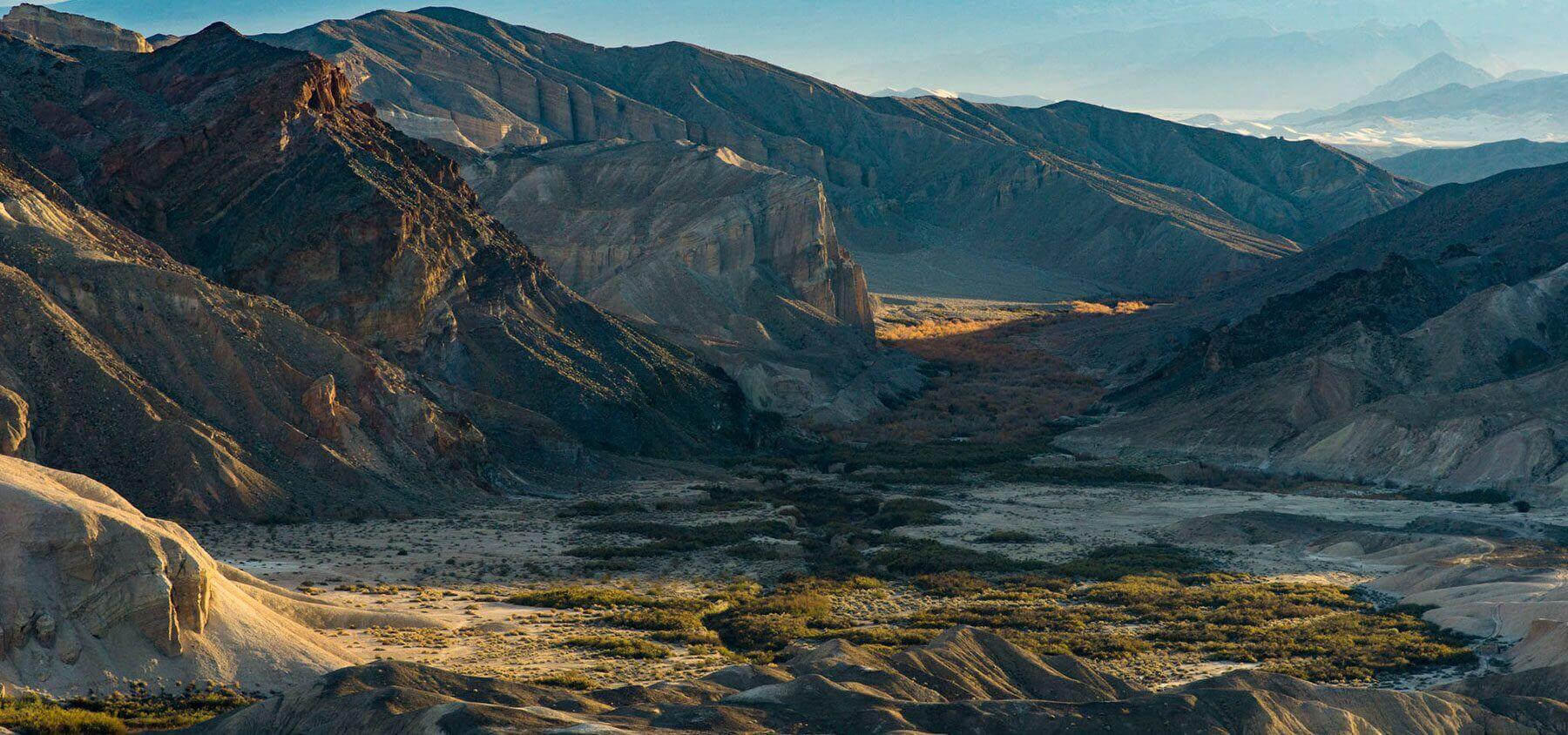
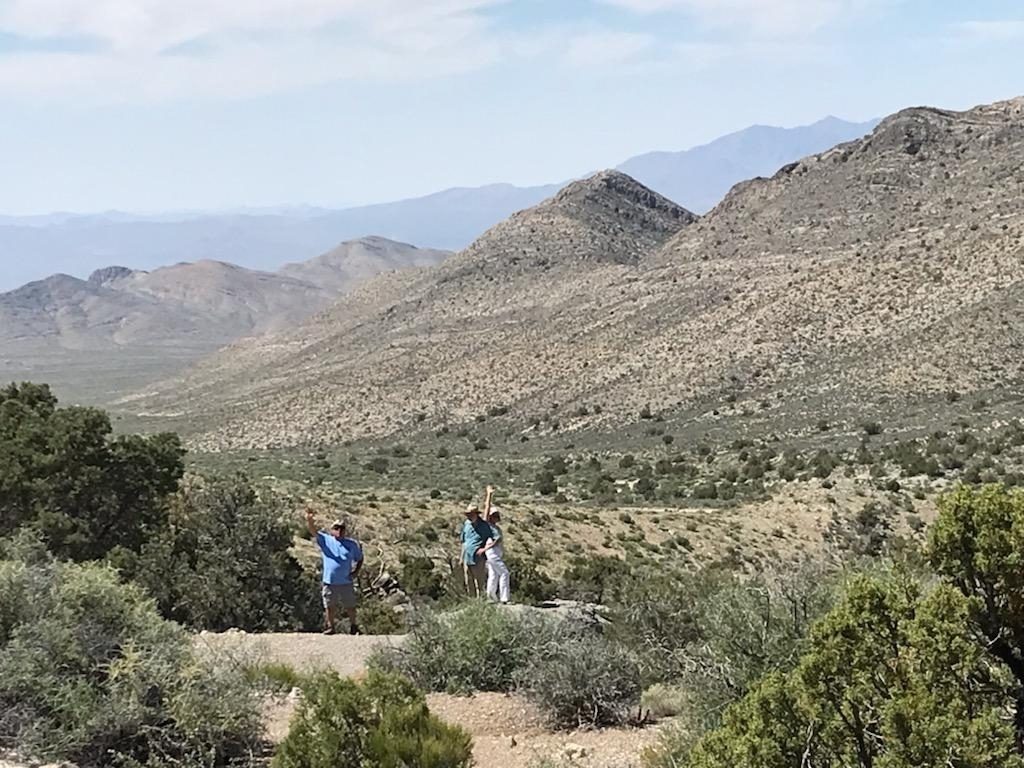
The Spring Mountains rise abruptly from the Mojave Desert, their wind-swept summits lifting into cooler worlds of pinyon, juniper, ponderosa pine, ancient bristlecone, creosote, white bursage, and Mojave yucca.
Only a short drive from my home at Cynthia’s Basecamp, this steep range holds layers of desert history: prehistoric agave roasting pits, early mining ruins, old travel corridors, and traces of the original Old Spanish Trail.
I wanted to know all of it.
Not from hearsay. Not from a map. I wanted to feel the route, see the land, and begin imagining whether this could become a future Cynthia’s History Safari.
But in a rugged landscape this large, you do not simply wander in and hope to find the treasures.
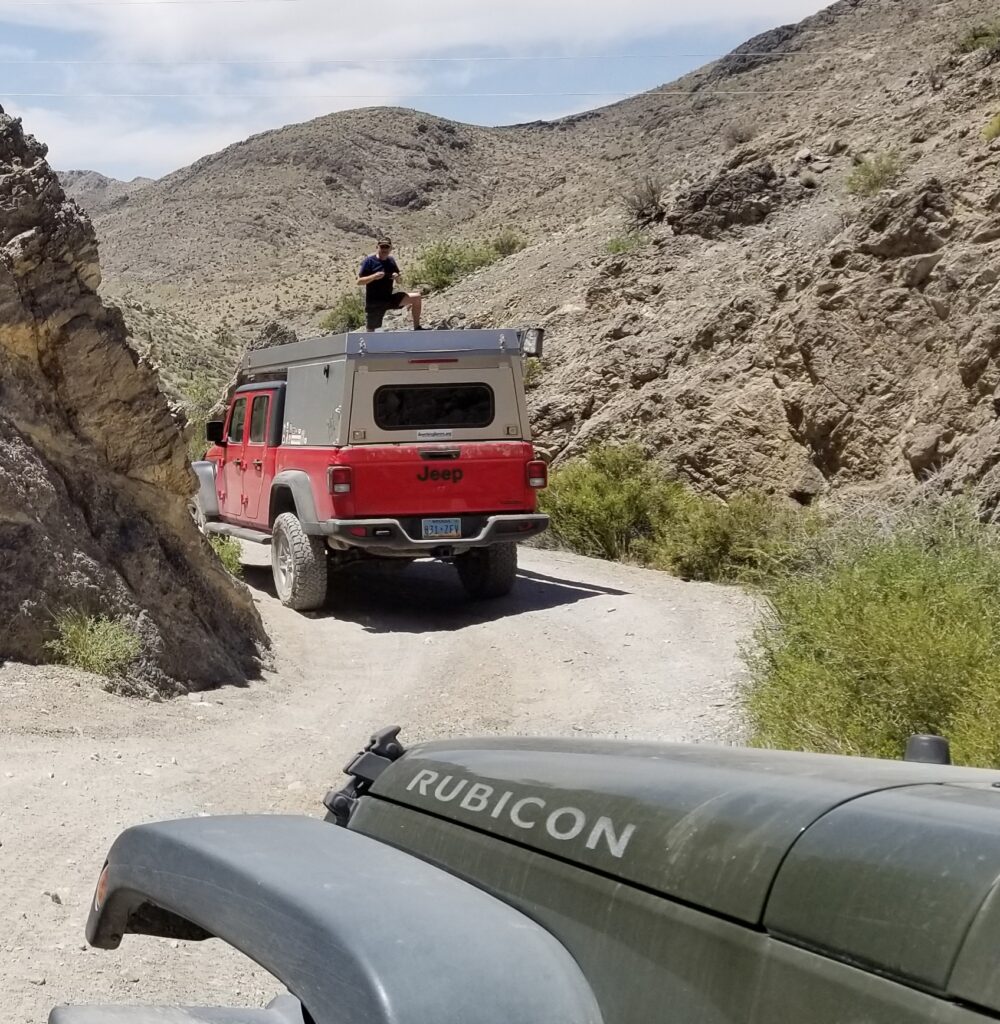
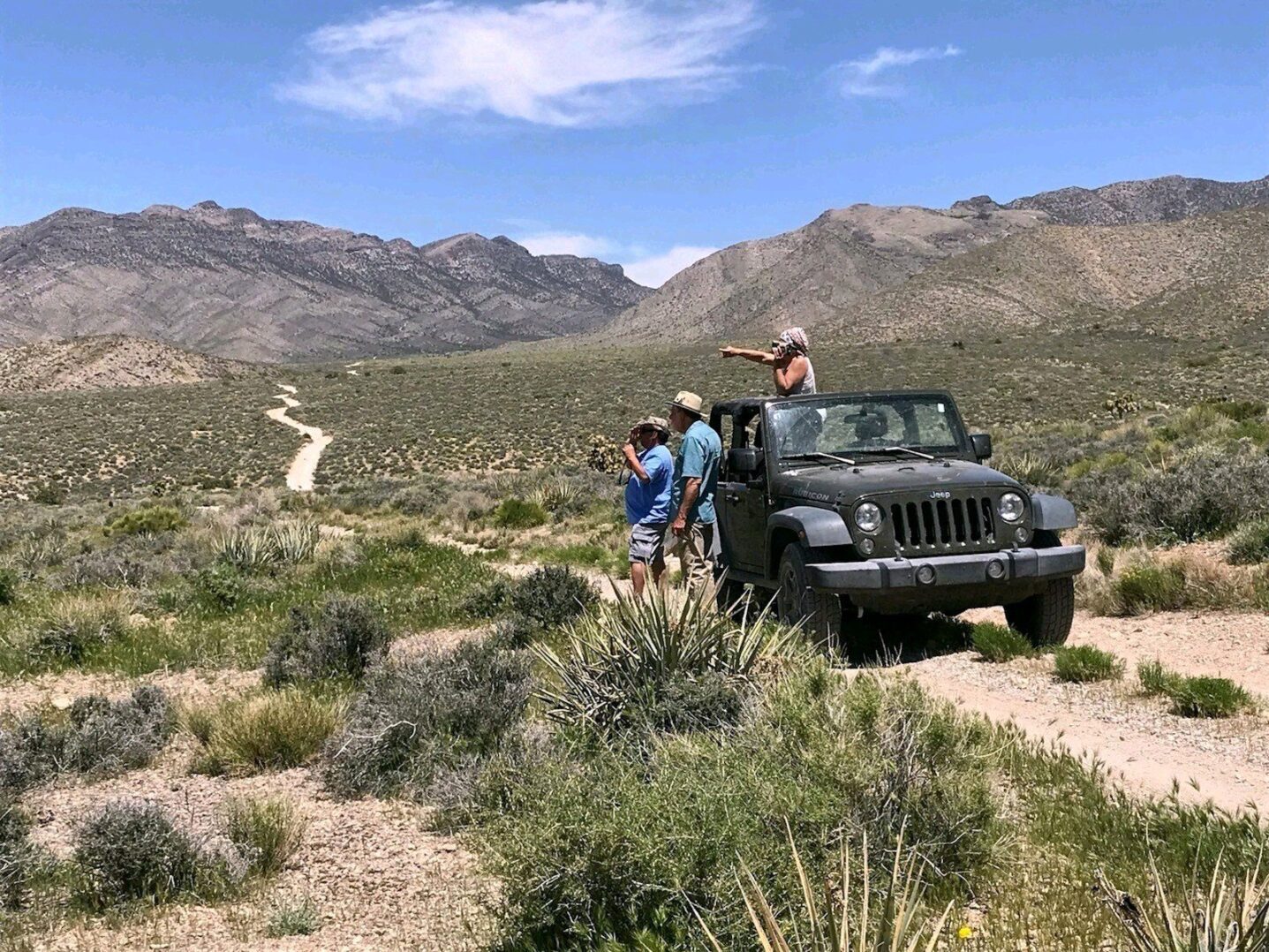
Enter Glenn Shaw — explorer extraordinaire and Nevada State Director of the Old Spanish Trail Association — along with Dwayne and Cesare, who agreed to join the expedition. These are the men you want beside you when the road gets rough.
We readied our Jeeps, met near Blue Diamond, NV and headed out.
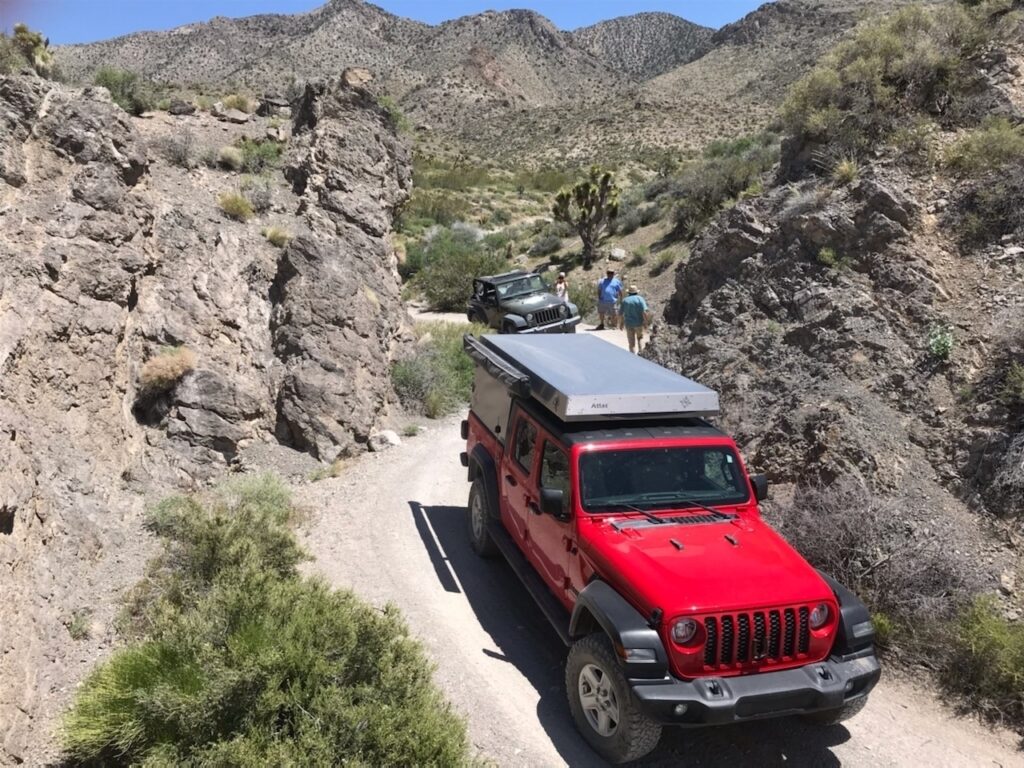
Glenn first guided us to a massive agave roasting pit. For more than a thousand years, people gathered in places like this to harvest, roast, share, eat, talk, work, and live. Standing there, I could almost smell dinner in the coals and hear the satisfaction of a job well done — friends and family fed, stories exchanged, the desert made generous by knowledge and effort.
The Potosi Mine came next.
It was a different feeling entirely.
The remains of Nevada’s early hard-rock mining history rise harshly from the mountain wall — collapsing, industrial, and severe. I imagined the heat, noise, machinery, dust, oil, fuel, and human labor of the nineteenth-century mining world. It was fascinating, but not comforting.
I liked the agave roasting place so much better.
Then Glenn announced, almost casually:
“Hey, we’re on the actual original Old Spanish Trail – the Armijo Route.”
There it was — quiet, plain, and astonishing.
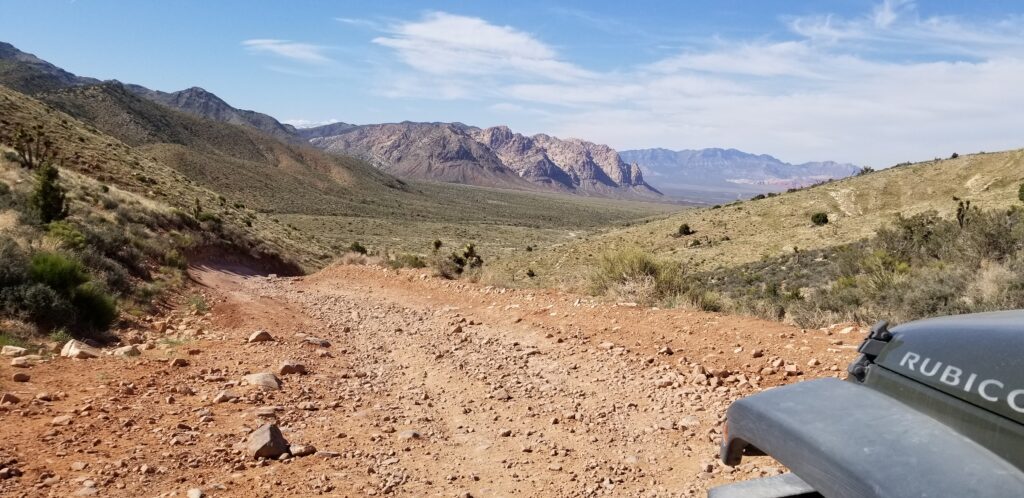
A route that had carried people across distance, uncertainty, hunger, risk, ambition, and necessity. I tried to imagine Antonio Armijo in 1829, with Santa Fe far behind him and Mission San Gabriel still far ahead. No GPS. No modern map. No cell signal. No certainty. Just men, animals, supplies, weather, judgment, and the old human insistence on going forward.
My cell phone did not work either.
But Armijo made it. Others followed. Routes became memory. Memory became history. History became roads. And eventually, one became the Interstate 15.
That is what keeps drawing me back to desert history.
The Mojave is never empty. It is full of movement — Native foodways, trade routes, mining camps, wagon roads, explorers, families, risk-takers, laborers, and people trying to get from one world to another.
This scouting trip left me with the bones of a future History Safari: the comfort of the agave roasting place, the jolt of the mining ruins, and the astonishment of standing on a trail that once required everything from the people who traveled it.
Some places are not meant to be rushed.
They are meant to be entered with someone who knows how to notice.